Your utility’s annual CCR summarizes sources, detected contaminants, and violations.
Your water, explained
Know what’s in your water—and what to do next.
Start with your location. We connect you to the likely provider, current public records, and plain-language context for the numbers in your report.
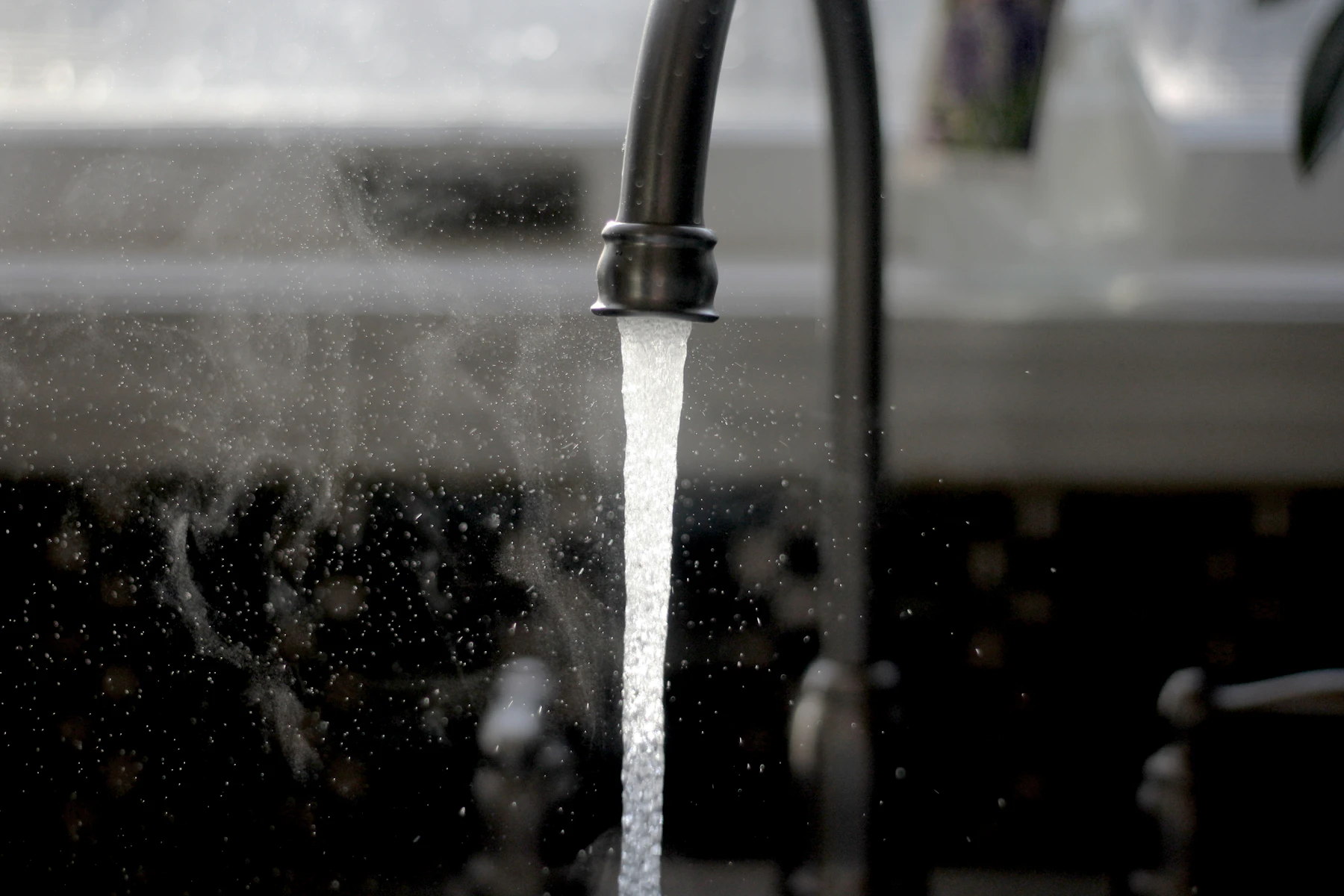
Start with the public record. Test when the question is specific to your home.
Photo: Imani / Unsplash ↗Begin here
Search a city, ZIP code, water system, or PWSID.
Private address lookup
Which provider most likely serves my address?
Use this only when a city or ZIP has more than one plausible provider. Your address is sent directly to the Rails lookup service for this request and is not placed in the URL, browser storage, analytics, or client logs.
01 / Utah water overview
Is Utah tap water safe?
Public tap water in Utah is routinely monitored under state and federal rules. The right answer for your home, however, depends on your water system, its current notices, and sometimes your own plumbing.
Utah’s water comes from a mix of mountain streams, reservoirs, wells, and springs. As water moves through mineral-rich rock and soil, it can pick up calcium and magnesium—the usual cause of hard water and white scale.
A report lists contaminants found above reporting thresholds. A detection is not automatically a safety violation; compare the detected value with the MCL, action level, or other standard and read the violation column.
Private wells are not regulated by Utah’s Division of Drinking Water; owners arrange testing.
Hard water can create scale and soap problems without making water unsafe to drink.
02 / Water by city
Popular city reports
Official city and utility sources. Your provider may differ from the city named in your address.
Utah County
Alpine
3 plausible providers
Data updated Sep 20, 2026 ↗Salt Lake CountyAlta
2 plausible providers
Data updated Sep 20, 2026 ↗Duchesne CountyAltamont
1 plausible provider
Data updated Sep 20, 2026 ↗Kane CountyAlton
1 plausible provider
Data updated Sep 20, 2026 ↗Cache CountyAmalga
3 plausible providers
Data updated Sep 20, 2026 ↗Utah CountyAmerican Fork
7 plausible providers
Data updated Sep 20, 2026 ↗Stay informed
Get water-quality alerts for your area
Enter your email and location to receive relevant water-quality alerts. You can change the city or ZIP code before submitting.
03 / Contaminants & conditions
Common water concerns
Start with the result, the unit, and the applicable limit. Taste, smell, and appearance alone cannot diagnose every concern.
Hard water
Usually a scale and appliance issue—not a drinking-water violation. Calcium and magnesium cause white spots and buildup.
ReadArsenic
A naturally occurring contaminant regulated at 10 parts per billion in public drinking water. Check your system’s measured level.
ReadLead
Lead often comes from service lines or home plumbing, so a utility-wide report cannot tell you the result at your exact faucet.
ReadPFAS
Public systems are monitoring for regulated PFAS. Results and compliance timelines vary by water system.
ReadNitrates
Nitrate is regulated at 10 mg/L as nitrogen. Private wells near agriculture or septic systems deserve particular attention.
ReadFluoride
Utah law has prohibited adding fluoride to public drinking water since May 7, 2025; naturally occurring fluoride may still be detected.
ReadChlorine
Utilities use disinfectants to control germs. A noticeable taste or odor does not by itself show that the water is unsafe.
Read04 / Ask Utah Water Quality
Questions are a good place to start.
Use the Utah Water Quality assistant on this page to ask in plain language. For the best answer, include your city, water provider, and the number or phrase from your report that concerns you.
05 / Testing & treatment
Report first. Test second. Treat the result.
No single filter removes every contaminant. Buy treatment only after you know what problem you are solving.
Review
Read your local report
Confirm the provider, report year, detected level, units, comparison limit, and any violation notice.
Test
Decide if a home test adds value
Test when you use a private well, suspect plumbing-related lead, have a specific symptom, or need to verify treatment.
Treat
Match technology to evidence
Look for independent certification covering the specific substance, capacity, flow rate, and maintenance schedule you need.
07 / Guides
Start with the question you have.
Short, practical reading paths for Utah homes, renters, private-well owners, and lake visitors.
How to read a water-quality report without getting lost in the table
Identify your system, find the violation column, compare like units, and distinguish an MCL from an action level or goal.
EPA report guide ↗Why Utah water leaves white spots
Mineral scale is usually calcium carbonate. A softener addresses hardness; it is not a universal contaminant filter.
Understand hardness ↗What should I test for?
Choose analytes based on your source, plumbing, nearby land uses, symptoms, and local health-department guidance.
Private-well guidance ↗Do I need a filter—or a softener?
Softeners exchange hardness minerals. Carbon, reverse osmosis, and other systems target different substances and require maintenance.
Compare treatment ↗Private well basics for Utah homeowners
The owner is responsible for safety. Start with local health-department requirements and a laboratory designed for drinking water.
Utah well testing ↗08 / Quick answers
Frequently asked
Does a detected contaminant mean my water is unsafe?
No. Detection means a substance was measured at or above a reporting threshold. Compare the detected result with the applicable MCL, action level, or other benchmark, and check whether the report marks a violation.
Why does my water leave white spots?
White spots are commonly mineral scale from hard water. Hardness can affect fixtures, soap performance, and appliances, but it is not itself a federal health-based drinking-water violation.
Do I need a filter if my city report has detections?
Not automatically. First compare levels with standards and identify your goal. If treatment is warranted, select a device independently certified for that specific contaminant and maintain it as directed.
Is a city report enough to rule out lead at my faucet?
No. Lead can enter water through a service line or building plumbing after it leaves the utility. A properly collected tap sample from a certified lab provides home-specific information.
09 / Trust & transparency
The source should always be visible.
Utah Water Quality translates public information; it does not replace your water provider, a laboratory result, or a health professional. We prioritize Utah Division of Drinking Water, Utah Division of Water Quality, EPA, USGS, public-health laboratories, and official utility reports.
- Sources shownEvery safety claim points to a public source.
- Dates shownReviews and report years are visible where they matter.
- Limits statedUnknowns, service-area differences, and private plumbing are not glossed over.
Homepage reviewed July 15, 2026 · For an active advisory, follow the issuing agency.